Monday, December 04, 2006

The Lord's Prayer in Urdu

I have to admit, I have always thought that the opening lines of the "The Lord's Prayer" often repeated by a lot of Christians (or is just a Catholic thing?) have a very elegant sound to them--especially when chanted gently and in unison by a bunch of people--kinda like the "Ameen" one hears at the end of the Fatiha in congregations with enough Malikis in it (who tend to say it out loud, unlike most Urdu speakers, who usually follow the Hanafi school of Islamic practise):
Holy Father, who art in heaven
Thy kingdom come
Thy will be done
On Earth
As it is in heaven...
So, don't ask me how, but I stumbled on this a littel while ago and have been meaning to post it here; it's a page with the The Lord's Prayer in Urdu, together with a translation of "Ave Maria", the Catholic prayer to Bibi Maryam, The Virgin Mary, the formulation of the Trinity, and a couple of other things:

http://www.christusrex.org/www1/pater/JPN-urdu.html

Here's the prayer itself:


I have never actually heard it being chanted in Urdu. I wonder if it sounds anywhere near as sonorous; Urdu is a rather mellifluous language generally, so maybe it does...maybe some of the folks who were pillorying me on a list I am on for (they thought) being averse to any mention of Christianity and Pakistan in the same breath can help with that...

Technorati tags applicable to this post: - - - -

Thursday, November 30, 2006

Giving One's Life in the Holy Land - ...هم مدينے مين تنحا نكل جائينگے

Just thought I would share a post on my blog centered around a very small news story in an Saudi Paper and it's evoking a spiritual poem from "back home"...
hum madinay main tanha nikal jayaingay
aur galiyon main qasdhan b-hatak jay'eingay

hum wahaan jaa kay waapas naheen aayaingay
d-hoondthay d-hoondthay loag th-hak ja'eingay
in quick-and-dirty translation:
we will venture out into The City (of Madina) all alone
and lose our way in the streets, on purpose

we go to that land, and will not return
try and try as they might, folks will tire of trying to find us
The post is at:

http://ifaqeer.blogspot.com/2006/11/giving-ones-life-in-holy-land.html

Main Blog at:

http://iFaqeer.blogspot.com

If you are in Pakistan or elsewhere where you have difficulty accessing the Blogspot domain due to censorship, etc., please use

http://www.pkblogs.com/iFaqeer

Technorati tags applicable to this post: - - -

Friday, November 24, 2006

Are you sure... Qabil Ajmeri - مگر كبهي دل كي دهركنون مين ... قابل اجميري

Unaiza Nasim has a new (or at least new to me) blog where she seems to just be collecting good, really good, Urdu poetry. Here's one that had a very special place in our hearts back in college:

http://unaizanasim.wordpress.com/2006/11/08/kia-kero-gay

It's by Qabil Ajmeri...someone whose life story itself, we are told is the stuff of literature.

(And yes, I know I have used a "ray" () where I should have used a "Ray", so to speak, in the subject line/heading. But I am on a Apple OS X computer and don't have any keyboard options that type the right character. I will fix it later.)

Technorati tags applicable to this post: - - - - -

Thursday, November 23, 2006

rumi-o-hafiz-o-khayyam ka dhaik-ha hai kalaam

Also posted on the iFaqeer blog, with the title "Rumi. And Hafez. And Khayyam. And Of Whence They Spake.".
All the positive feedback on my post yesterday has been very gratifying.

Readers might also want to read this.

It is my desire to bring the poets and qawwals of South Asia to as wide an audience as "Rumi-o-Hafiz-o-Khayyam". We all read these these elders, and we all need to. But especially in this day and age we (all of us; Muslims and not, Sufi-leaning or not, Westerners and not) need to reconnect with the living tradition they represent--especially in South Asia. We need to connect with the zawiya, or angle, facet, of Islam that was, and still is, rooted so deep in the lands from where all we hear nowadays is "Deobandi", "Taliban", "Maududi", "Terrorism", and on and on.

Technorati tags applicable to this post: - - - - - - - - - - -

Tuesday, November 21, 2006

ha'ey kambakhth thoo nay pee hee nahee! !حاءے كمبخت تو نے پي هى نهين

Strong Disclaimer: This post is written purely "for myself". I know some will be touched by it--in whatever way--but if you're put off by either metaphysics, tasawwuf (Sufism), abstractions, or weird, personal transliteration schemes, PLEASE, PLEASE, do not read on. I really don't want to get into detailed discussions of any kind.
There are moments when one just wants to let go; to be lost in something. Something deep. When that happens, I often find myself gravitating to Qawwali, the Muslim mystic musical art form of "Sama" in its South Asian incarnation.

There's one piece, in particular, that I have been promising myself I will translate, render, if you will, into English and post, but just haven't had the energy and bandwidth to sit down and apply myself to the task.

So I just got home about 11 pm tonight (technically yesterday at this point) after attending, I guess, what you'd call a political meeting. After the meeting, I got into a rather refreshingly intelligent conversation with a relatively new friend. By the time I got home, and had checked in on the kids, and sat down to dinner, like I said, I was in a mood that was definitely leaning towards mu'arfa, irfan, tasawwuf, the metaphysical, or whatever you want to call it. So I turned to one of the only two bookmarks I have in the Real Player on my Mac at home.

And the first through, I just got lost listening to this piece. By the end of it, I was definitely close to a "haal", the Sufi version of what our US brothers and sisters would call "being in the zone", "the flow", and so on. And I am not even a formal Sufi. For a traditional "desi" like me (a South Asian), that is a title reserved for some attainment in the metaphysical realm. I am just someone who, I will admit, has an inclination in that direction and, frankly, have been too chicken to formally step on the "tareeq", or Way.

The piece just captures the mood I am in perfectly; the frustration with Naseh, The Preachy Folks, and their obsession with preaching and obsessing with enjoining moral conduct; the reference to the Wine of Truth's greatest bartenders (others use the word "cup bearers", but let's get with the 21st of Our Lord, The Prophet of Divine Love, shall we?) being exactly in Karbala, Najaf, and Samarra; and, of course, the frustration with folks who interpret the references to Wine, and Love in "our" language as moonshine (how else do I translate "t-harra"?) and carnal lust...

So then I looped back and transcribed the parts of it that I think really should be brought to the Rumi- and Hafiz- and Khayyam-in-English-reading public. I am going to try and do the translation some time later. But if you care to, and understand Urdu and/or the languages around it in the linguistic geography (like Hindi and Dakkani and Awadhi and...), do take a read to the following...and/or just watch this space for a translation.

The piece is almost universally referred to as "ha'ey kambakhth thoo nay pee hee nahee!" (Oh! You Unfortunate Wretch! You have not Imbibed!) Here are my selected excerpts. First the prologue, itself one the most deliciously intense tongue twisters in the Urdu language:
samajh samajhna samajh kay samjhoe
samajh samajhna bhee aik samajh hai

samajh samajh kay bhee joe na samjhai
mairee samajh main woe na samajh hai
and then the Qawwali itself, sung at the link above by the person who people who connect with the art on a very unvarnished, unapologetic level, as about the greatest proponent of that form in the 20th Century; Aziz Mian:
lutf-e-mai tujh say kya kahoon, nadaaN
(aray) ha'ey kambakhth thoo nay pee hee nahee!

x x

bathla'ey dhatha hoon thujhay maikhaanon ka patha
batha-o-kazmain, khurasan, saamara

khurshid mudha'a maira burj-e-sharaf main hai
aik saaqi karbala main maira, aik najaf main hai

x x

mairay shairon kay haqeeqath main na maanee samjha
badha-e-haq koe thoo angoor ka paanee samjha

thoo nahee jaantha arbab-e-thariqath kay usool
thayray bayhoodha sawaalaath sar-a-sar hain fizool

thoo nahee jaantha paymana kisay kehthay hain
thoo nahee jaantha maykhana kisay kehthay hain

isthaylaahaath-e-thasawwuf kee nahee thujh koe khabar
faqr kee raah main jahaan miltha hai jahaan kaif-e-nazar

kot-chashmi say thujhai k-hotee k-haree lagthee hai
mai-e-irfan bhee thujhay laal paree lagthee hai

ha'ey kambakhth thoo nay pee hee nahee!

x x

ahl-e-daanish nay thairay zehen ko kaisa samj-ha
baadha-e-shair koe jis dhum thoonay t-harra samjha

mai-e-tauheed kee main thoe wazahath kee th-hee
thoo na samj-hay aray nadaan yay qismath thairee

rumi-o-hafiz-o-khayyam ka dhaik-ha hai kalaam
jaam-o-meena kay libadha main thareeqath th-hee thamaam

naseha thuj-hai naseehath kay siwaa kaam nahee
jaam main gharq na kardhoon thoe maira naam nahee!

x x

(yay) Allah ki inayath hai kay main saif zubaaan hoon
Aur naasay, thairay liyay main koh-e-garaan hoon
I should put that last couplet in my email signature...once I have a translation, I guess...

Technorati tags applicable to this post: - - - - - - - - - - -

Monday, October 30, 2006

آزاد کراچی ریڈیو پروگرام شمار ۵ - Program 5, October 29, 2006


آزاد کراچی ریڈیو کے پروگرام شمار ۵ میں آئی فقیر نے گفتگو کا آغاز "آزاد کراچی ریڈیو" کی وجہ تسمیہ سے کیا۔ سمندطور نے بلاگ کی دنیا، حاکمیت جمہور کی دنیا کے عنوان سے ایک مختصر تحریر پڑھی۔ پھرآئی فقیر نے وادئ سلیکن میں پاکستانیوں کی ایک تنظیم اوپن کے حالیہ اجلاس کا کچھ حال سامعین کو سنایا۔ سمندطور نے امریکہ کی جنوبی سرحد پہ کھڑی کی جانے والی مجوزہ دیوار کے بارے میں رائے زنی کی۔ آئی فقیر نے حجاب کے متعلق اپنے کچھ مشاہد ات پیش کیے۔ پھر سمندطور نے جیک اسٹرا اور برقعہ کے عنوان سے اپنا ایک مختصر مضمون پیش کیا۔ آئی فقیر نے پروگرام کا اختتام اكبر اله بادي کے چند خيالات سے کیا اور سامعین کو پروگرام پہ تنقید کی دعوت دی۔

iFaqeer starts Program 5 a discussion of the provenance of the program's name. Cemendtaur then presents a piece titled "World of Blogs; World of Democracy", discussing blogs, democracy and globalization. iFaqeer then provides an update of an event by OPEN in Silicon Valley on the anniversary of the earthquake in South Asia and goes on to discuss some aspects of the topic of community and community building that the event focused on. Cemendtaur then discusses the proposed wall on the United States' southern border. iFaqeer then discusses his thoughts on the concept of Hijab and it's modern manifestation and Cemendtaur follows up with a short essay titled "Jack Straw and the Burka". iFaqeer concludes the program with quotes from Urdu poet/satirist Akbar Allahabadi.

Program 005 of Azad Karachi Radio is available at:

http://azadkarachiradio.blogspot.com/2006/10/program-5-october-29-2006.html


If you are in Pakistan or elsewhere where you have difficulty accessing the Blogspot domain due to censorship, etc., please use:

http://www.pkblogs.com/AzadKarachiRadio

Formally speaking, Azad Karachi Radio is produced out of Silicon Valley and is a service of Azad South Asia, a collaborative media effort initiated by yours truly and Cemendtaur. You can reach the team at iFaqeer@gmail.com or leave comments on either this blog or at Azad Karachi Radio.

Technorati tags applicable to this post: - - - - -

Sunday, October 29, 2006

سمندطور کی اردو دنیا/Cemendtaur ki Urdu Duniya - New Urdu Blog

After almost a couple of years of nudging--hopefully all of it polite--Cemendtaur has launched a blog in Urdu. Do check it out and interact with it. Cemendtaur is a writer with very unique and deep thoughts, a style all his own and, of course, a group good grasp of the language. I really feel it is a very necessary and positive step to have him join the conversation online interactively in Urdu:

http://cemendtaur-ki-urdu-dunya.blogspot.com/

آدابAdaab,
فقیر-iiFaqeer


Technorati tags applicable to this post: - - - -

Sunday, October 22, 2006

Az Karachi asth, Radioyay Azad; Relaunching Azad Karachi Radio

About a year ago, I had started podcasting. I, we, rather, started two podcasts. One was in English and was, well, podcast, via the RSS feed for this blog while the other was in Urdu and podcast as "Azad Karachi Radio".

To which a lot of people go..."Say what?!" Are you talking about the political independence of Karachi, a la Singapore?

Well, let's explain.

Both of the members of the team working on the podcast count the city of Karachi as our emotional, intellectual and social wellspring. And thus the idea is to have an Azad--the word, say, Gandhi would have used, for "free"--voice that has a Karachi accent and speaks with the spirit of that brave city.

Thus the title of this post: Az Karachi asth, Radioyay Azad.

That phrase is my uneducated way of saying "From the heart of Karachi, this is Azad Radio". PaRhay lik-hay koe Farsi kya hai, پڑھے لِکھے کو فارسے کیا ہے؟ , as the old line of poetry went; educated people should be able to grasp complicated ideas in literary language--which, before Europe became ascendant, was Farsi, from Istanbul to Rangoon, if not further.

Another reason--and this might be a very personal eccenticity of mine--the phrase from Persian pops into my head is that, growing up abroad, my father used to listen BBC Urdu (as well as English and Hindi) regularly. And if you didn't turn the radio off fast enough at the end of most Urdu broadcasts, the next thing you heard on that wavelength was "Az London asth, Radioyay BBC" (From London, this is BBC Radio). So in my head, Urdu, Radio and the traditional roots of Urdu come together in that one sentence. And it took me decades to actually learn what the words exactly meant.

So, to paraphrase the call sign of BBC's Persian Service, az Karachi asth, radioyay azad. Cemendtaur and I are reviving Azad Karachi Radio with Program 4, a year after the last one went online.

This program restarts the discussion with Cemendtaur joining the team live and in studio. This program congratulates celebrants on Ramzan, Eid and Diwali, with some thoughts on the spirit of the season; discusses the first anniversary of the earthquake in South Asia and the role of the blogosphere in helping remember those in need; and throws out some political thoughts on matters of social concern, also discussing the
recent exchange between a seminarian (madarasa student) and Gen. Pervez Musharraf that made the rounds on the Internet.

The audio file for directly downloading and listening to the fourth program is here. You can now also stream the podcast using the Odeo (odeo/5e510de8d8638707) player from any Azad Karachi Radio blog page.
Just take a look at the top righthand corner of the page!

The new edition of the podcast is at:

http://azadkarachiradio.blogspot.com/2006/10/azad-karachi-radio-program-004-october.html

And the main Blog is at: http://azadkarachiradio.blogspot.com/

The podcast is aslo available on Yahoo! Podcasts at:

http://podcasts.yahoo.com/series?s=3d848ad579b260b163d17218e7fcbad5

and on Odeo at:

http://odeo.com/channel/34582/view

Though the directories might need a little time to register the new edition--they hadn't at the time of writing this.

You can subscribe to either the text version of this blog or the Podcast using the following the following URL/link for our RSS feed:

http://feeds.feedburner.com/AzadKarachiRadio

and copy-pasting that address where the software you use to subscribe to PodCasts (for example iTunes from Apple, iPodder, etc.) asks you to put addresses of Podcasts you are subscribing to manually.

If you are in Pakistan or elsewhere where you have difficulty accessing the Blogspot domain due to censorship, etc., please use:

http://www.pkblogs.com/AzadKarachiRadio

Formally speaking, Azad Karachi Radio is a service of Azad South Asia, a collaborative media effort initiated by yours truly and Cemendtaur, out of Silicon Valley. You can reach the team at iFaqeer@gmail.com or leave comments on either this blog or at Azad Karachi Radio.

Technorati tags applicable to this post: - - - - -

Monday, October 09, 2006

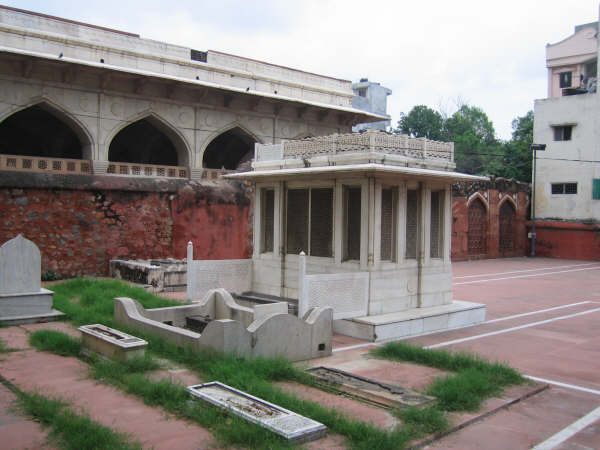
Pictures of Ghalib's Tomb and Khwaja Nizamuddin's Mausoleum

Just noticed this at Jahane Rumi


Na kaheen mazaar hoe tha...

Click on the picture to go the post and see more pictures.

Technorati tags applicable to this post: - -

Friday, September 15, 2006

First Urdu Radio Station launched in India

After the launch of Doordarshan's Round-the-clock Urdu channel, now it is the turn of a 24 hour Urdu Radio Station.

On 7th September 2006, Worldspace Radio, India launched the first-ever exclusive Urdu Radio Station. It is named Falak, meaning "Sky".

Shishir Lall, Managing Director of WorldSpace India said at the launch,
"We are delighted to launch the country's first exclusive Urdu radio station and look forward to celebrating the mystery and beauty of the language of a bygone era with listeners across the country."
"Falak will now enable music lovers to go back in time and indulge in the lyrical sounds of Urdu."


Some Programs on Falak:
Taareekh Key Jharokhey Sey – An interesting peep into the times gone by, Radio Falak takes a look into the history of various important cities, places of interest, monuments etc., sharing interesting and unknown anecdotes.

Filmy Saughaat – The show showcases film songs featuring Urdu lyrics, from India and Pakistan. Sabiha Fazal, a specialist presenter who excels in his knowledge of Hindustani and Pakistani film music, shares anecdotes about singers, composers, songwriters, and film producers on this entertaining show.

Aqwaal-E-Zareen – Catch social messages by great philosophers from all over the globe that have been translated and adapted in Urdu to imbibe modesty, humility and good human values.

Bazm-E-Khanam – A special program for the ladies, the show features tips on good health, house keeping, family relations, culinary delights from Indian, Mughlai, Irani, Uzbeki, Arabic and Afghani platter – their history, the little known tricks and techniques of their preparation.

Sufiyana Kalaam – A special program featuring Sufi Qawalis, Mersias, Nohas and Baints

Ghazal Usne Chhedi – Tune in for a fascinating program featuring theme based shows on Urdu poetry

Sham-E-Farozan – Catch the very best ghazals by renowned Urdu poets on this enchanting show.

If you are looking at recapture the culture and ethos of a bygone era, tune in to Radio Falak and revel in the soothing yet powerful voices of legends like Ghulam Ali, Mehdi Hassan, Iqbal Bano, Tahira Saiyad, Farida Khanam, Reshma, Abida Parveen and the legendry Nusrat Saheb.

Sources:
1. Times of India

2. Agencyfaqs


Technorati tags applicable to this post: - - - -

Thursday, August 17, 2006

DD Urdu: Der Aaye, Durust Aaye

UkN had earlier mentioned about Doordarshan's plan of starting a 24 hour Urdu news channel in India. And finally, the channel has been unveiled.

On the eve of India's 59th independence day, the country's Punjabi/Urdu speaking (as he's a migrant from Pakistan) prime minister, Dr. Manmohan Singh, officially announced the launch of DD Urdu, the 24 hour Urdu news channel.

The launching of this channel will definitely give fresh breaths to this beleaguered language, and will also prove to be élan vital for Urdu media which many thought is dying in India.

Urdu ke Naam wishes DD Urdu all the very best.

Click for news report: http://www.hindu.com/2006/08/16/stories/2006081618441200.htm

Technorati tags applicable to this post: - - - -

On importance of Doordarshan's Urdu Channel

"Urdu is an important language of the country with about 52 million people having declared it as their mother tongue."

- P R Dasmunsi (Information & Broadcasting Minister, Government of India)

Source: http://timesofindia.indiatimes.com/articleshow/1894036.cms

Urdu to be taught in Himachal schools

Dharamsala, Aug 8 (IANS)

Source: http://www.nerve.in/news:25350011258

Urdu will be introduced as an optional subject in government schools in Himachal Pradesh.
Chief Minister Virbhadra Singh announced this here while addressing a gathering of Urdu poets from India and Pakistan.

The schools where Urdu would be taught were being identified, he said. Singh said his government had been extending a warm welcome to Pakistani delegates visiting Himachal Pradesh from time to time.

Technorati tags applicable to this post: - - - -

Tuesday, August 15, 2006

Doordarshan (India) Launches a New Urdu Channel


A new Urdu channel launched by Doordarshan (the official television channel of the Government of India). Prime Minister Dr. Manmohan Singh launched the new channel on the occasion of the 59th Independence Day of India, August 15, 2006, in New Delhi.

______________________________________________________________________

NEW DELHI:

Beginning this Independence Day, an Urdu channel will be offered from Doordarshan's stables. Slated for launch by Prime Minister Manmohan Singh on Tuesday evening, the channel goes on air a good eight-and-a-half months behind schedule.

Keeping a commitment made in Parliament to repeated requests from across the political spectrum for an Urdu channel from the Doordarshan platform, the then Union Information and Broadcasting Minister S. Jaipal Reddy had in June 2005 announced that it would be launched on January 1, 2006. In fact, fund allocation had also been made in the 2005-06 Budget. However, problems in software availability and "general inertia" delayed the launch of the channel.

With the powers that be at Doordarshan deciding that DD-Urdu will be a public service channel, software availability continues to be a problem.

To begin with, DD-Urdu will be on air for seven-and-a-half hours with only two-and-a-half hours of fresh programming in the evening. This will be repeated twice the following day.

The content will be a mixed bag; part entertainment, part news and part information. Daily, the channel will air a news magazine christened `Imroze'. Also, film director Muzaffar Ali has been commissioned to produce a 52-episode programme on Urdu litterateurs.

Besides, the in-house production team has put together a film-based programme, and a cultural round-up has been prepared for the channel by ANI TV. Add to this, B. R. Chopra's serial "Bahadur Shah Zafar" of 1986 vintage. Doordarshan officials said the public broadcaster had floated tenders to acquire more Urdu programmes.


(Report courtesy, The Hindu)

http://www.hindu.com/2006/08/14/stories/2006081403271300.htm

Thursday, July 20, 2006

Mumbai Blasts; A Shairana Response


DNAIndia has the text of a nazm by Jawed Akhtar about the Mumbai bomb blasts or, more generally, terrorism:

http://www.dnaindia.com/report.asp?NewsID=1042659


Technorati tags applicable to this post: - -

Monday, July 10, 2006

Qasmi: Kaun kehtha hai kay mauth aayee tho marjaa'oN ga...

[Photo courtesy Urdu Manzil and Syed Saghier Ahmed Jafri]
As we say in Urdu, the man has passed on from the material, ephemeral world. But the poet and his poetry lives on, and helps us live on. Probably one of the most quoted couplets in Urdu about this very matter, one that captures the matter as few have done before, in any cultural and literary tradition, is from Janaab-e-Qasmi himself, who said:
kaun kehtha hai kay mauth aayee tho marjaa'onga
main thoe dharya hoon samandhar main uthar jaa'onga
or
Who says that when death comes, I will die away?
I am a river and into the ocean will I flow away
The Wikipedia article on Qasmi Saahab can be found at:
http://en.wikipedia.org/wiki/Ahmad_Nadeem_Qasimi
Of course, in this day and age, where a lot of us go to express our grief and share our loss is the Internet. There are now quite a few websites where one can find Urdu poetry and pictures of Qasmi Saahab. Here' a selection:

From Amjad Sheikh, we get:

Poetry of Ahmed Nadeem Qasmi Marhoom in his own voice. including his famous poem Pathar:
http://www.urdulife.com/mushaira/poet.cgi?anq_ahmed_nadeem_qasmi
And in Unicode (meaning it is written in Urdu and easier to read, and you can make it bigger, etc. like you would English text), we have:
http://tinyurl.com/rsyob

You can also read selected poetry by Qasmi Shaib at
http://www.urdulife.com/forum/index.php?showforum=65
On a personal note, I just noticed a post on the BBC Urdu blog from Musaddaq Sanwal, someone I knew, as they say, in another life:
http://www.bbc.co.uk/blogs/urdu/2006/07/post_12.html
And from the UAE, Syed Saghier Ahmed Jafri Saahab and Urdu Manzil send the picture above and the following links for poetry:
http://www.urdumanzil.com/adab_nama/allmi_mushaira/index.html
http://www.urdumanzil.com/adab_nama/qasmivisit/index.html
and photographs:
http://www.urdumanzil.com/adab_nama/pics/photo-10.html
http://www.urdumanzil.com/adab_nama/pics/photo-14.html
The post on Pakistaniat: All Things Pakistancan be found at:
http://pakistaniat.wordpress.com/2006/07/11/ahmed-nadeem-qasmi/
Technorati tags applicable to this post: - -

Monday, May 29, 2006

Urdu Diploma course for Non-Urdu speakers

The Hindu : Karnataka / Bangalore News : `Don't give Urdu a communal colour'

Source: The Hindu, dated May 27, 2006

BANGALORE: The former Additional Chief Secretary Chiranjeevi Singh on Friday called upon people "not to give Urdu language a communal colour."

"To associate Urdu language with Muslims alone is wrong. Urdu is a language with historical importance and it belongs to all. It represents a cultural synthesis and has no barriers," he said after inaugurating a diploma course in Urdu for non-Urdu learners.

He pointed out that the popularity of ghazal and Urdu poetry had attracted many people towards learning the language.

He urged the Karnataka Urdu Academy, which has started the course in coordination with the National Council for Promotion of Urdu, New Delhi, to give preference to "Deccani Urdu" rather than "Aligarhi" and "Lucknowi Urdu." He also suggested that the Urdu Academy should get textbooks prepared in Deccani Urdu at least up to the primary level.

Encouraging non-Urdu learners to take up the diploma course, Mr. Singh said: "If you follow a Bollywood film or even hum a Hindi song, it shows that you are interested in Urdu. It is a beautiful language. Once you master the language, you can start playing with it."

Tourism and Information Secretary I.M. Vittal Murthy promised support to the academy in popularising the language. Academy chairman M. Nooruddin said the one-year diploma course would commence from June 4. Classes, which will be conducted by specially trained faculty, would be held on Sundays between 9 a.m. and noon. There was no minimum qualification to get admission to the course and the fee for the entire year was Rs. 200, he said.

Interested persons can obtain the admission forms from the academy's office at Kannada Bhavan. Details can be had on +91 80 22213167.

~ Qais

Technorati tags applicable to this post: - - - -

Wednesday, May 17, 2006

Dhaikhaingay; Lazim Hai kay Hum Bhee Dhaikhaingay

Adil Najam's Pakistan- Based on Faiz Ahmed Faiz's "Hum Daiykain Gay".
6 minutes and 35 seconds
April 24th, 2006

Here's a personal testament from one Pakistani about his country. It's also a very interesting piece of electronic art incorporating one of the most popular pieces of Urdu poetry written in the 20th Century:

http://video.google.com/videoplay?docid=-6291983484610119600&q=pakistan


Technorati tags applicable to this post: - -

Friday, April 28, 2006

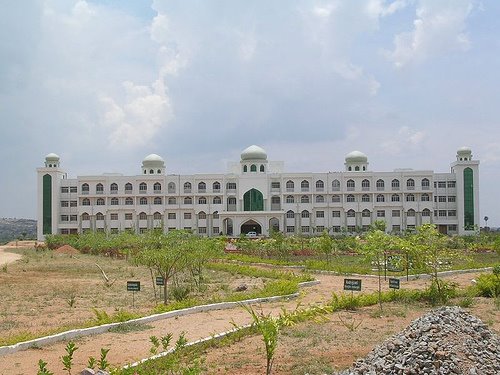
Photo: Urdu University

A front view of Maulana Azad National Urdu University (MANUU), the sole Urdu University of India - and one of the biggest institutions of Urdu in the Indian Sub Continent. Prof.A.M.Pathan is currently the vice chancellor of the University.

The University is situated in the outskirts of Hyderabad, India.
Technorati tags applicable to this post: - - - -

Monday, April 03, 2006

Eulogy to an Urdu Lexicographer

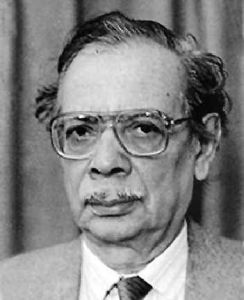
The following piece appeared in The Hindu, eulogizing a star persona from the world of Urdu: Shan-ul-Haq; the star that disappeared in the maze of infinite galaxy, but not before giving several eternal gleam to the world of Urdu literature, the most prominent being the compilation of the Oxford English-Urdu dictionary, the bilingual edition of the Concise Oxford Dictionary.

http://www.hindu.com/lr/2006/04/02/stories/2006040200340600.htm

An elegy for a lost friend

BY ANAND

A tribute to Shanul Haq, Urdu scholar and linguist.

SHANUL HAQ `Haqqee' died in October 2005, at age 88. For some, he was the grand old man of lexicography; for many, of the Urdu ghazal. For me he was a friend.
The intensity of this loss and grief felt by many like me calls for some elucidation.
Shaul Haq Saheb — that's how I addressed him — spent most of his last years compiling the Oxford English-Urdu dictionary, the bilingual edition of the Concise Oxford Dictionary, the mother of English lexicons. He was particularly pleased that he could include Urdu equivalents of almost 1,25,000 English words and expressions as well as illustrative sentences (with their Urdu translations) to convey the exact meaning of the word or idiom. And that a guide for pronunciation using the International Phonetic Alphabet (IPA) would help overcome a persistent problem that Urdu speakers face.


Wide interests

There is no use listing some of the highest civilian and literary awards he was given, for that would fail to reveal the breadth of his wide interests and learning. Every generation has its grand old men; he belonged to the generation before me. But this gap seemed to vanish every time we met, whether to discuss the column on language that I wrote for a Canadian publication, or to talk about some problem with the word-processing software I had given him. Often we did this while sneaking a cigarette outside his home in Montreal or by going to a bistro for a glass of wine, both of which he preferred to do away from his son's house where he had been living after migrating to Canada. He often lamented the contract for the dictionary that he had signed with OUP several years ago for a laughable sum, but he abided with the terms of the contract being the gentleman that he was, toiling regardless to produce an excellent work of reference.
He could not have been farther from the image of the archetypical cantankerous, verging-on-senility, grand old person of letters. In his late seventies, when most grand old men are content with wearing their laurels, he mastered the use of the word-processor and the mystery of the Internet. He would sometimes telephone me for help in retrieving documents, result of several days work, that his computer seemed intent on swallowing without a trace. Next he began tackling the Urdu word-processing software, no mean task as several letters of the alphabet must be joined to form words in Urdu. Once when I told him about a Hindi word-processing software, he immediately asked me to get it for him, and within a matter of months, sent me the copy of one his collections of Urdu verse transcribed in Hindi script, for corrections.


Shanul Haq Saheb was born in Delhi, and studied at the Aligarh Muslim University and at Delhi's St. Stephen's College. His love of languages began with his first job, translating the Axis power's propaganda broadcasts in Hindi-Urdu into English, in 1942 in Shimla. He used to reminisce, with a certain nostalgia, about the charms of hill lasses. He was in Calcutta (Kolkata) at the time of the Partition, and used to recall with horror the killing that took place right in front of the hotel where he had sought refuge. The train full of Muslims that was meant to take him and other refugees back to Delhi was sent straight to Pakistan, a regret that he never outlived. He chose to settle in Pakistan, as there was little inkling at that time of the bitterness that was to develop in its relations with India.

Legacies

I was to find that his standing as one of the architects of modern Urdu ghazal was no less towering than his reputation as a linguist and a scholar of Urdu language. Among his legacies is the Grand Urdu Lexicon. The first 16 volumes of this monumental work were published when he was the Honorary Secretary of Pakistan's Urdu Language Board. He told me of the countless hours he spent late into the night, after his regular job at the Ministry of Information, at the Board's office filling out nearly 1,00,000 hand-written cards for the words that were to be included in the lexicon.

Shanul Haq Saheb's skill as a translator was sometimes overshadowed by his eminence in other areas. He had translated the Bhagawad Gita and Kautilya's Arthshastra into Urdu, but first mastering enough Sanskrit to read the works in the original. For me, one of the most memorable moments of our friendship came one bitterly cold afternoon. The sun was streaming through the bay window in his son's living room, its light reflecting on the snow piled shoulder-high outside, as he read his translation of Shakespeare's "Anthony and Cleopatra", with me following the text in English. The scene described the intrigues and jealousies inside Cleopatra's palace, and he could recite most of it just from his phenomenal memory. The Urdu vocabulary is not only more colourful and versatile, but its idioms are far more effective for describing the banter of slave girls in a harem. It's a pity that only those who know Urdu can have a taste of his translation, for it was every word and idiom — and I am willing to do battle in support of my assertion — as evocative and poetic as the original.

I could not bring myself to attend his funeral, for my grief and sense of loss was very personal. His family understood. One of the last conversations we had was about echo-words in various languages, soon to be the subject of a Wordspeak column.

Read more about the Late Shan-ul-Haq at: http://en.wikipedia.org/wiki/Shan-ul-Haq_Haqqee

Technorati tags applicable to this post: - - - -